Using AI to Understand Your Health
Your smart research partner for medical questions
You wake up with a new ache. Or your doctor mentions a medication you've never heard of. Or you get lab results with numbers that mean nothing to you.
What do you do? Google it and end up convinced you have a rare disease? Call your doctor's office and wait three days for a callback?
There's a better option now. AI can help you understand health information quickly and clearly, in plain language you can actually understand.
But let me be absolutely clear about something first.
Important: AI is NOT a replacement for your doctor. It cannot diagnose you. It cannot treat you. It's a research assistant that helps you understand information and prepare for conversations with your healthcare provider. Always consult a medical professional for health decisions.
What AI Does Well With Health Questions
Think of AI as a patient, knowledgeable friend who can explain medical things in ways that make sense. Here's where it really shines:
- →Explaining medical terms — What does "benign" actually mean? What's the difference between an MRI and a CT scan?
- →Understanding your medications — What is this drug for? What are common side effects? Should I take it with food?
- →Preparing questions for your doctor — What should I ask about this diagnosis? What are the treatment options I should know about?
- →Decoding test results — My cholesterol is 210, is that high? What does a low white blood cell count mean?
- →Researching conditions — My sister was just diagnosed with something, help me understand what she's facing
How to Ask Health Questions
The key is being specific and asking for explanations in plain language. Here are some examples:
Understanding a medication:
"My doctor prescribed metformin. Can you explain what it does, common side effects to watch for, and if there are foods I should avoid while taking it? Please explain in simple terms."
Preparing for an appointment:
"I'm seeing a cardiologist next week because of high blood pressure. What questions should I ask? What information should I bring with me?"
Understanding test results:
"My blood test shows my A1C is 6.2. What does A1C measure and what does this number mean? Is this something to be concerned about?"
Researching symptoms:
"I've been having headaches that start behind my eyes, usually in the afternoon. What are some common causes of this type of headache? I want to understand possible reasons before talking to my doctor."
What AI Cannot Do
This is important. AI has real limitations when it comes to health:
- →It cannot diagnose you. Never treat AI's response as a diagnosis. It doesn't know your full medical history, it can't examine you, and it can't run tests.
- →It may have outdated information. Medical knowledge changes. AI might not know about the newest treatments or recent research.
- →It doesn't know you. AI gives general information. Your doctor knows your specific situation, allergies, other conditions, and medications.
- →It can make mistakes. AI can occasionally get facts wrong. Always verify important health information with your doctor.
If you have a medical emergency, call 911 or go to the emergency room immediately. AI is for research and understanding, not for emergencies.
Getting the Most from AI Health Research
Here's how to use AI wisely for health questions:
Use it to prepare, not to decide. AI helps you understand information and come up with questions. Your doctor helps you make actual health decisions.
Be specific in your questions. "Tell me about diabetes" is less helpful than "What lifestyle changes help manage Type 2 diabetes, and what should I know about blood sugar monitoring?"
Ask for plain language. If an answer is too technical, just say "Can you explain that in simpler terms?" The AI will rephrase it.
Cross-check important information. For anything serious, verify what AI tells you with your doctor or a reputable medical website like Mayo Clinic or WebMD.
Share what you learned with your doctor. It's perfectly fine to say "I researched this and have some questions." Good doctors appreciate informed patients.
A Real Example
Let's say you just got back from the doctor and they mentioned you have "mild osteoarthritis" in your knee. You're not sure what that means or what to expect.
You could ask AI:
Your question:
"I was just told I have mild osteoarthritis in my knee. Can you explain what this means, how it might progress over time, and what I can do to manage it? Also, what questions should I ask my doctor at my follow-up appointment?"
AI would explain what osteoarthritis is (wear and tear on joint cartilage), what "mild" typically means, common management strategies like exercise and weight management, and give you a list of thoughtful questions to ask your doctor.
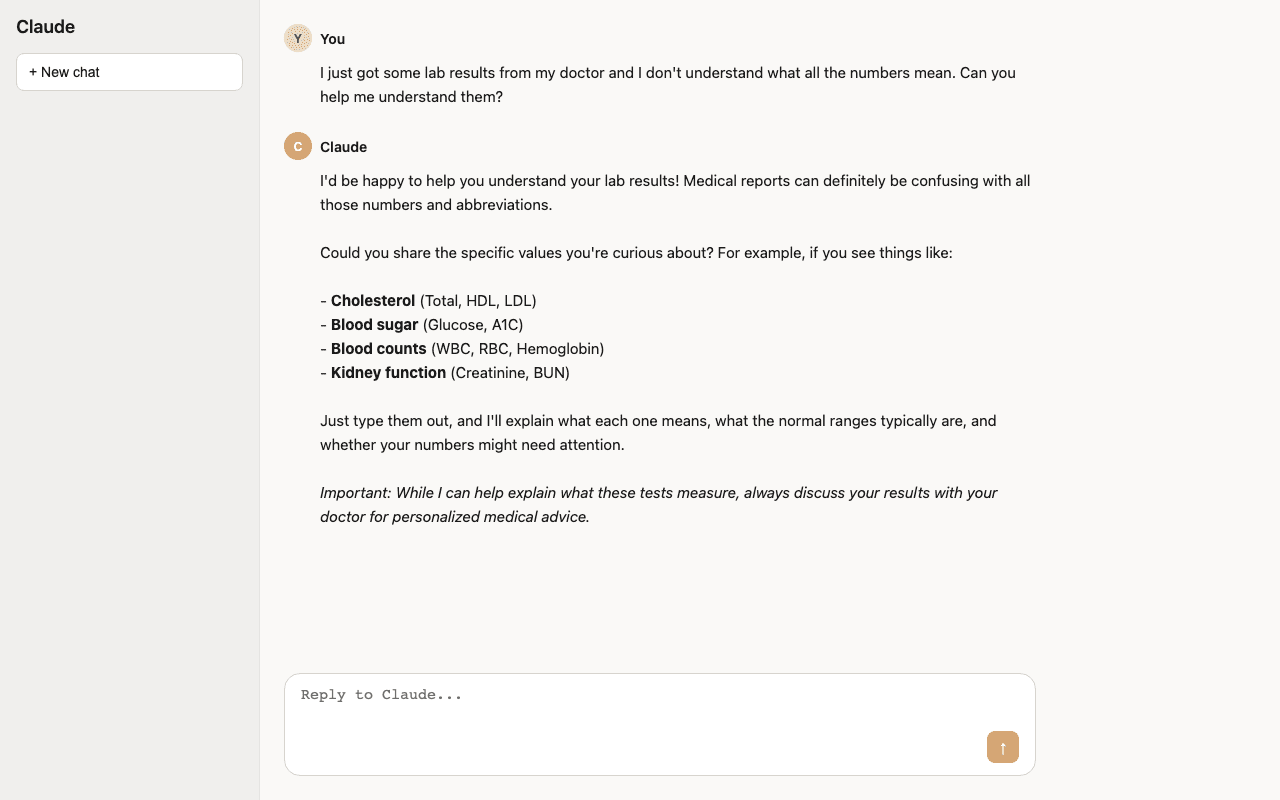
What it looks like when you ask AI about health topics
You leave that conversation better informed and better prepared. That's the power of using AI as a health research partner.
Remember: AI helps you understand. Your doctor helps you decide. Together, you're better equipped to take care of your health.
Want more practical AI tips?
Subscribe to Speak Human for real guidance, no jargon, no hype.
Subscribe FreeAbout Speak Human
I help people like you feel confident using AI in everyday life. No jargon, no judgment, just practical guidance.